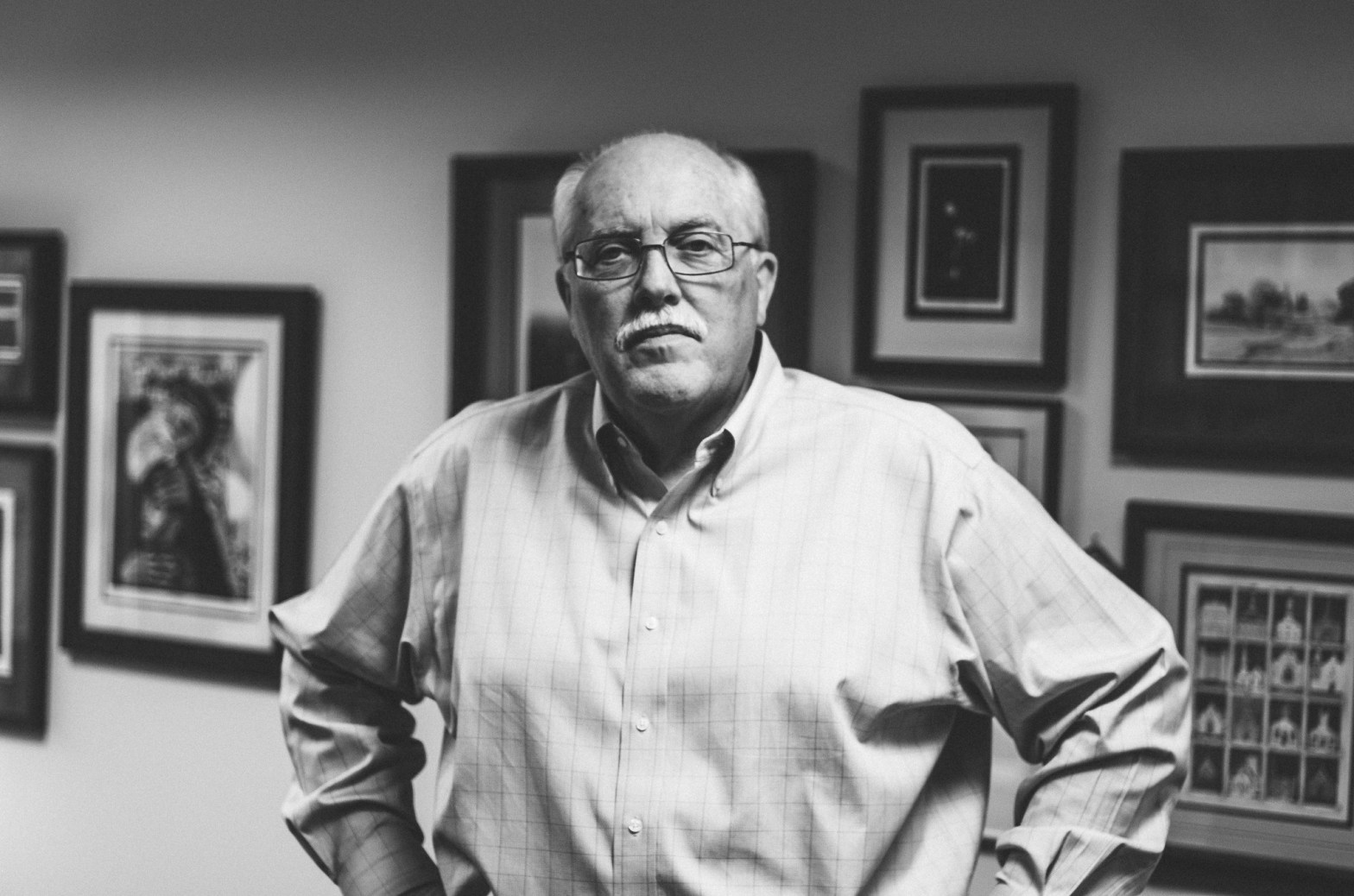
Lee Eclov — my mentor, my friend, my pastor — died unexpectedly a couple nights ago. I wept in bed for hours last night at the thought of it. But today I have been reflecting on his impact on my life and on everyone else he ever came in contact with.
In the summer of 2009, I moved to the Chicagoland area in order to go to seminary. Village Church of Lincolnshire was one of the closest churches to the school, and within my first weeks of moving into town I stopped in on a Sunday morning. It soon became like a second home to me. Lee was warm and inviting and immediately I felt encouraged by him and the congregation there.
It was a church in constant transition, as many seminarians would come and go as they came to school and then left again to develop their own ministries around the world. In that incubation period of seminary and grad school for students, Lee would tenderly put his fingerprints of grace upon anyone in his presence. And now the evidence of his impact is felt literally all around the world because of the care and intention of his attention to those of us whom he served with gladness. Lee’s fingerprints can be found in every corner of the world. What a legacy.
Despite being one of the friendliest people I have ever known, he shared that he was not someone always full of joy. He described himself as being someone “given to melancholy.” But he did not let that stop him from being a grateful person. He signed every email Be Ye Glad, a nod to a favorite song of his by Michael Kelly Blanchard. His license plate, a gift from his wife Susan, read BYEGLAD. He mentioned once that did not consider it a vanity plate, but rather a gratefulness plate. I liked that.
His favorite story in the Bible was that of the Prodigal Son. The love exemplified by the father in that parable of Jesus meant so much to him. He had a print of the famous Rembrandt painting “The Return of the Prodigal Son” hanging in one of the hallways of the church. He frequently taught us to imagine God as our merciful and loving father, one who, no matter what life circumstances we found ourselves in, loved us and was proud of us. Lee embodied that love for all in his care, most particularly his son, Andy. His love for Andy was a regular topic with me, and perhaps Andy being his son was the deepest and most profound joy of his life.

Lee was my professor for one of the classes for my Master of Divinity degree. I believe it was called “Intro to Pastoral Care” or something like that. That class changed my life for a number of reasons. Perhaps most significantly, it showed me that I was not very good at counseling and would not make a good therapist or caring minister. It was at this realization and with his encouragement that I changed my concentration from Intercultural Studies to Pastoral care. I would later also pursue a Masters degree in Counseling Ministries to further develop myself to be equipped for future ministry. The skills I learned and the humility he taught me through that class was the path that led to what Sarah and I do today in serving teenagers as their full time house parents. Without him, I would not be a Family-Teacher.
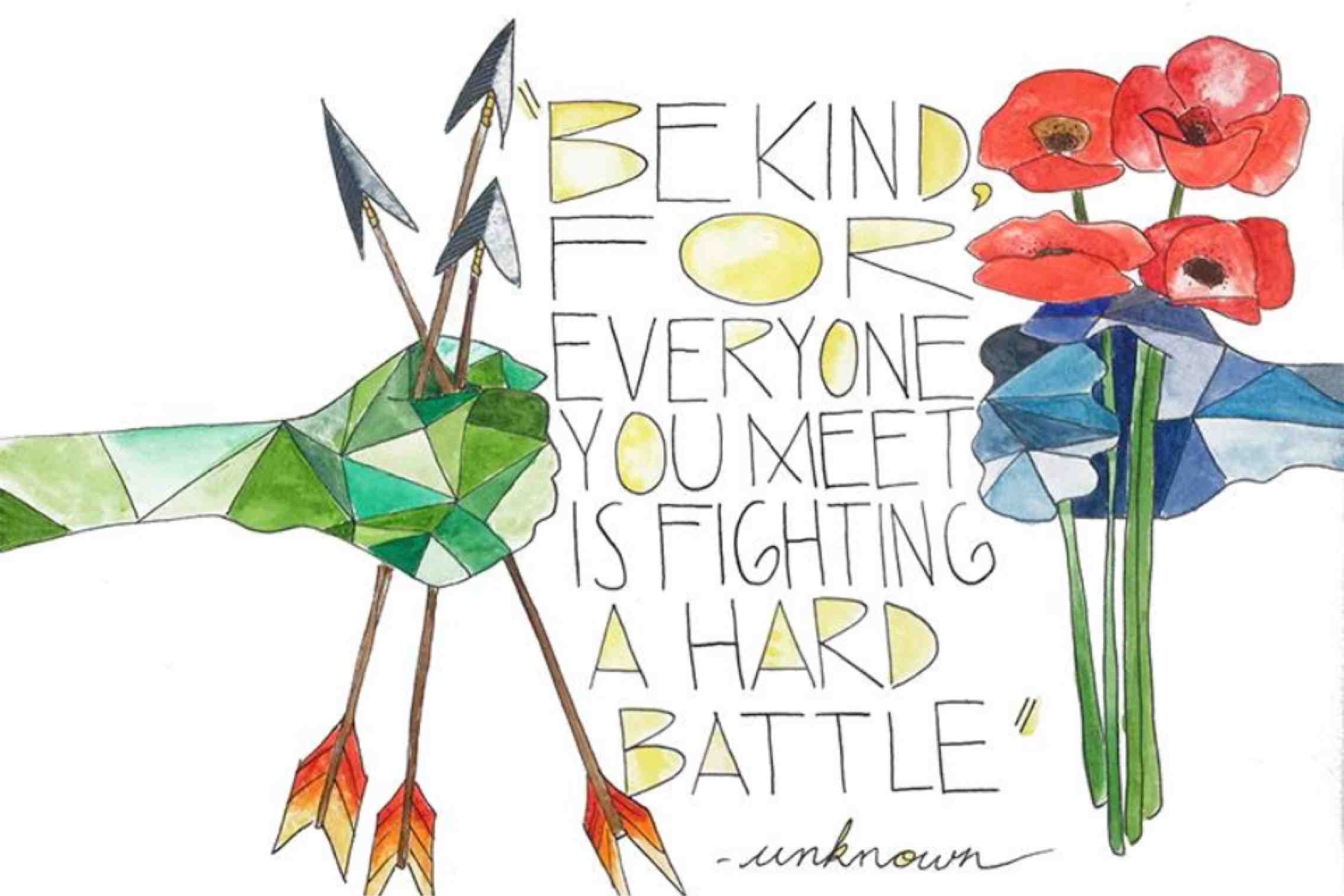
It was in that class that he first shared the quote and maxim, “Be kind, for everyone you meet is fighting a great/hard battle.” The explanation of that concept reoriented my perspective towards grace and mercy towards others, and it helped me see people more fully and with more patience. Soon after that class, I had a piece of art commissioned using that quote and it now hangs on our living room wall where every one of our kids sees it every day.
Lee loved words. He considered himself a “word-worker.” His craft and art was that of shaping words carefully into sermons, insights, quips, illustrations, articles, emails, a well-timed piece of advice, and more. He was a wordsmith, and took the craft of wordworking seriously. Like a blacksmith shapes and molds iron or steel, he did so with words. His sermons were carefully crafted each week. He preached from a manuscript he wrote diligently each week. He published sermons and sermon illustrations. He wrote multiple books. He continually encouraged me to write as well. He even called me a fellow wordworker, and I always felt that was one of the greatest compliments he could give me.
I liked the person I was becoming when I was around him, so I tried to be around him as frequently as possible. I wanted to help him in whatever ways I could. And he empowered me in all sorts of ways that I will forever be grateful for. He allowed me to serve in his church in many capacities including being an Elder — which to me felt funny at 26 years old, but it was one of the most important experiences of my entire young adult life. I allowed me to start a men’s group, serve on the mission board, and plan and play music within the worship team. I even worked at the church part-time for about a year doing tasks related to the website and the communication needs of the church. I was paid some sort of paycheck, but the real pay was just more time learning under him.
Even though Sarah and I moved to Omaha in December of 2014, that did not stop Lee’s correspondence with me, nor his encouragement. He felt like one of my greatest cheerleaders and always was building me up with confidence and praise. He told me regularly of how proud he was of me and Sarah. He would write me emails and direct message me on Facebook and send me texts about a book he just read, or an article that reminded him of me. He checked in on me regularly after my brother died, and he’d share his own thoughts on his own mortality — something that was constantly on his mind.
On the one year anniversary of my brother’s death he sent me an email which mentioned his own thoughts on his mortality. He mentioned guest preaching at a church on Psalm 90. I was reminded of that email today as I read his obituary. This is what he shared this with me on that day:
“Good morning, Andrew, my fellow Wordworker. Here’s my sermon on Ps 90. Whereas you’ve been grieving your brother’s death, I’ve been struggling with the reality of my own mortality. I turn 71 on 1/17. Not sure there’s a lucky number in there. At this age, the obituaries in the paper smirk at me. Working on this sermon, especially the latter part, helped me. I need to return to those verses 13-17 often, I think, in order not to lose my nerve.“
This was the sort of thing he’d send me. I will miss these deeply. I will miss knowing what he is currently reading. He most recently recommended “Theo of Golden,” which I recently finished when Ezra and I visited Chicago for Ezra’s birthday. (His last comment to me was about loving to read about Ezra and my time together in Chicago). He also introduced me and Sarah to Leif Enger by recommending to us years ago to read Peace Like a River, an all-time favorite book of ours.
He loved books because he loved a well-told story. He was always up for a good story, especially one told in an out-of-the-box way, or one simply well-crafted. Sarah and I attended a Moth storytelling event with him and his wife Susan that still stands out as a memorable evening. We also went to a Chicago bar to see a storytelling presentation in the form of a Pecha-Kucha, where a storyteller shows 20 slides for 20 seconds each to tell a story. These sorts of things would excite both Lee and me to the point where we’d try to adapt them into events at the church. For example, we taught through the book of Proverbs in the form of Pecha Kucha using a number of us from the church. I loved these sorts of experimental endeavors by Lee. I carry that experimental attitude with me, still.
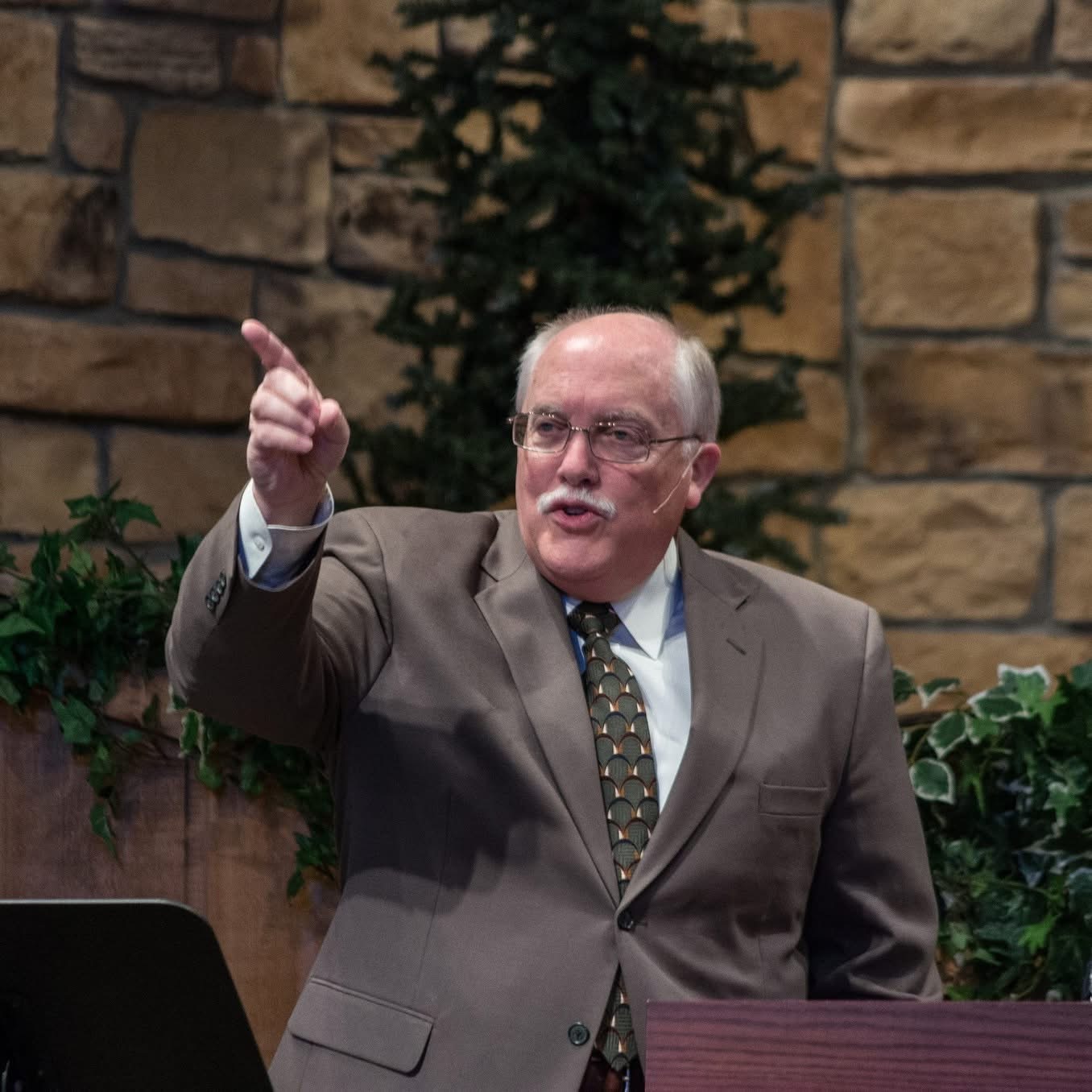
Lee was a pastor’s pastor. He met with ministry students on his own time every Wednesday in the lower part of the chapel on campus. He discussed topics that he felt young people would need to be informed about to be faithful ministers. Lee was my greatest mentor. He taught me to be bold and brave in ministry and to never shy away from the uglier or dirtier parts of ministry. He taught me that as a believer, there is nothing unclean from which we must shy away from. Lee taught me that the key to an effective ministry was to “get low,” and he exemplified such humility with everyone he had contact with — whether seminary students, members of his church, or the random person he would encounter at Einstein’s Bagels (his second office).
I didn’t grow up hearing benedictions in church, but Lee forever changed my idea of what they could be. After every sermon Lee gave, he would not just speak a benediction over the congregation, he would sing one. Singing the benediction at the end of every service became one of his pastoral hallmarks. Sometimes he’d sing the words from various benedictions found in the Bible. Sometimes he’d sing the Aaronic blessing. And sometimes he’d sing of the longing to be home with God.
Now, every night Sarah puts the boys to bed, she sings to them one of Lee’s benedictions. This has been her tradition and memorial to Lee for years now. We will continue to remember him each night at bedtime in this way.
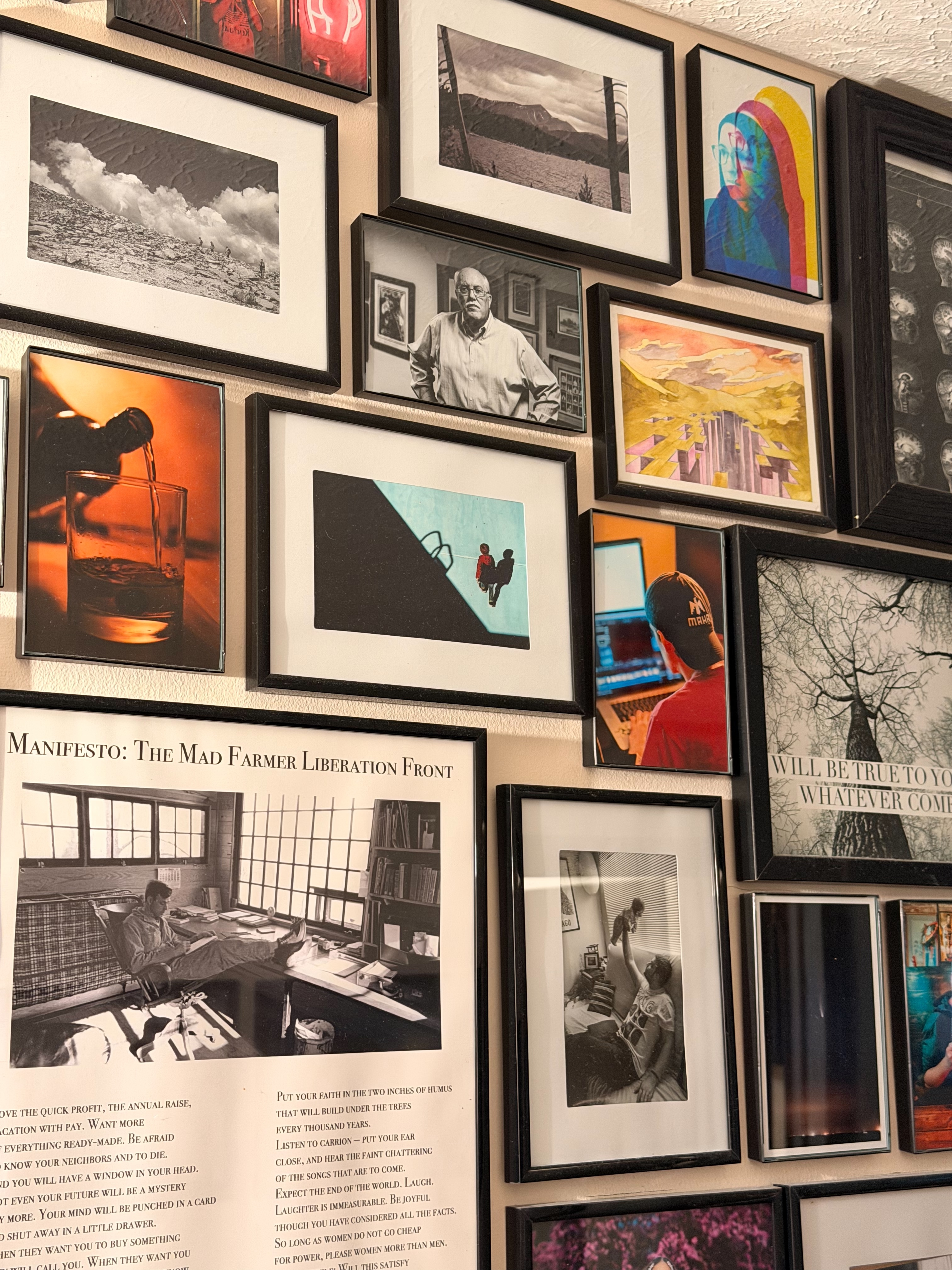
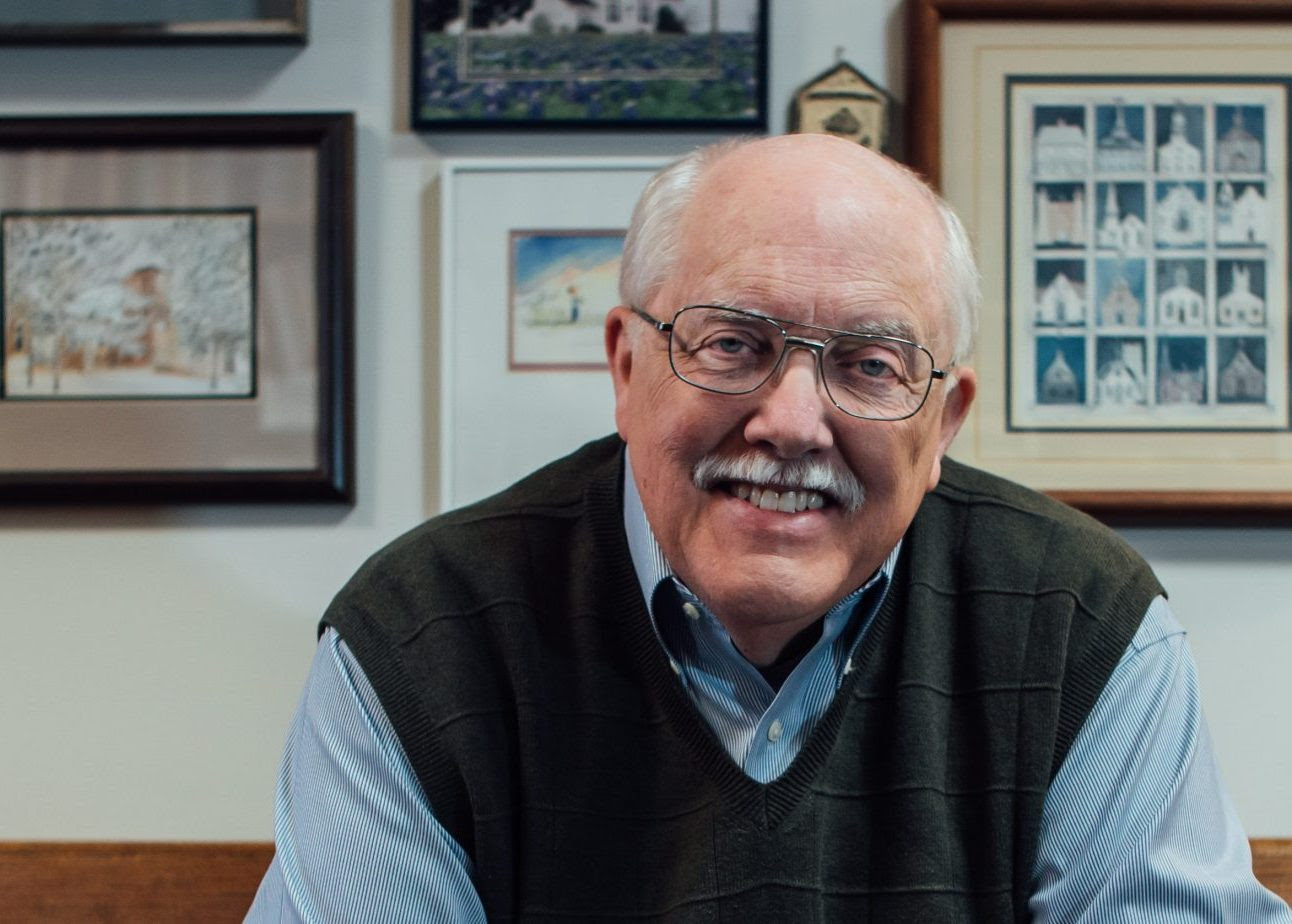
I have a gallery of photos that hangs over my desk. Lee also had a gallery of photos on his office wall. In this gallery of photos over my desk I have hanging a photo I took of him in his office when I worked with him at the church. He looks over me as I work or journal or reflect. I look at it often and think of him. I will miss him.
Lee lived with a constant longing for home. He wanted to embody that sense of home to as many people as possible. It’s the image he built his life and ministry around. And so now, despite my heartbreak, I am glad that that his longing for home has been fulfilled. I imagine Lee now, not as a lost prodigal son, but as a son who has made his dad proud. I imagine him running into the Father’s open and welcoming arms, singing to Lee with a joyous warmth, “Be ye glad, oh, be ye glad, every debt that you’ve ever had has been paid up in full by the grace of the Lord. Be ye glad, be ye glad, be ye glad!”
 Stepping Back