Some of my reactions to Alex Garland’s new movie
I.
Last night I saw the premiere of Alex Garland’s new movie, Civil War. I went into the movie as cold as I could. Every movie I watch I try to go into as uninformed as possible. I did see part of a trailer for Civil War a while back, enough to know that Kirsten Dunst and Jesse Plemmons, who are married in real life, are both in the film. Knowing that detail, the basic premise of the movie, the director, and that it’s an A24 movie, I knew I’d want to go see it. And it seemed like a movie-theater sort of movie.
I was right.
II.
If you are the type that likes to go into a movie completely cold as well, then I would not read more of this until you’ve seen the movie. I will provide details about the movie, but I will not give any sort of spoilers related to the movie’s plot beyond the basic structure of the movie, though, so read on if you desire.
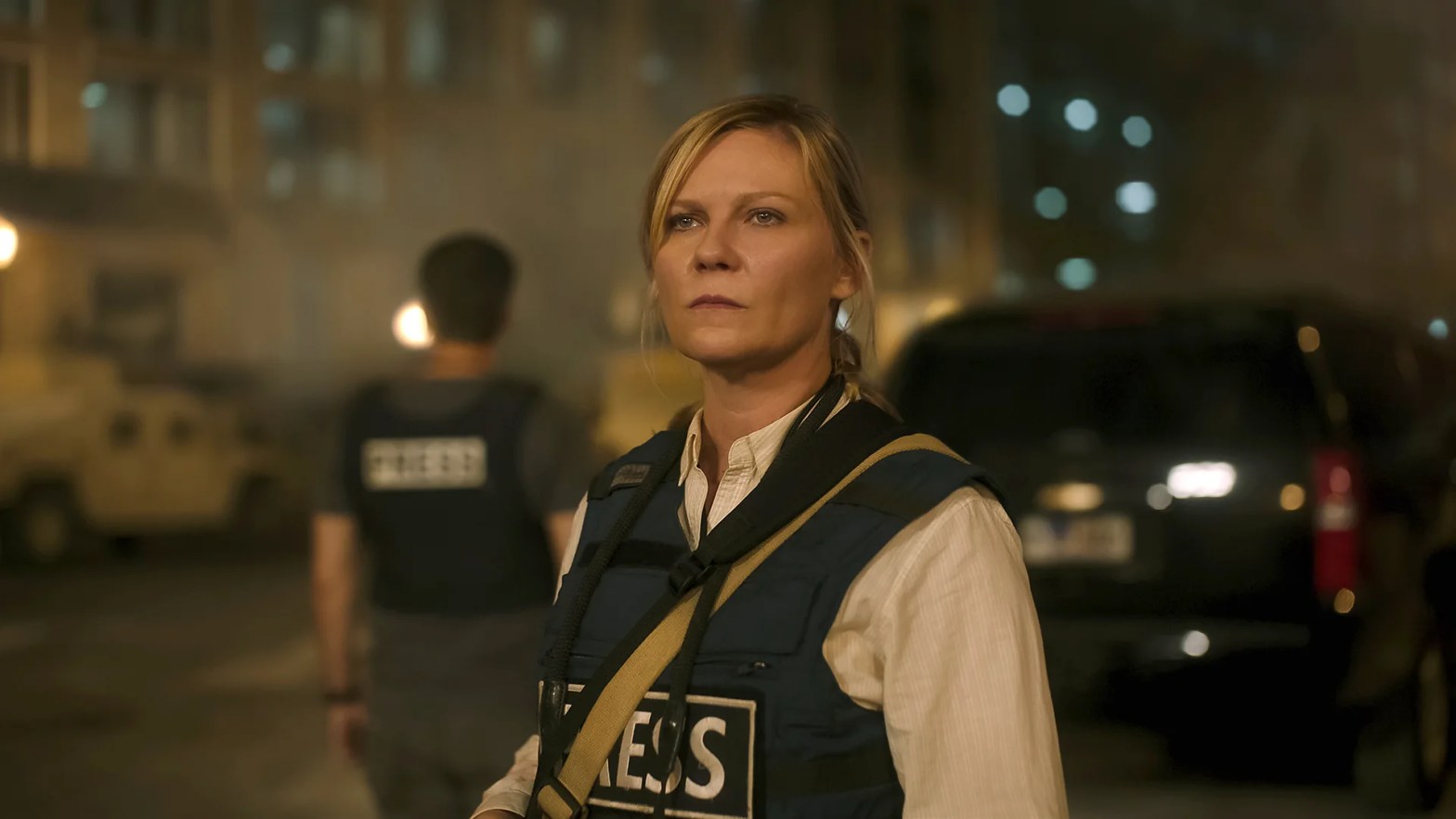
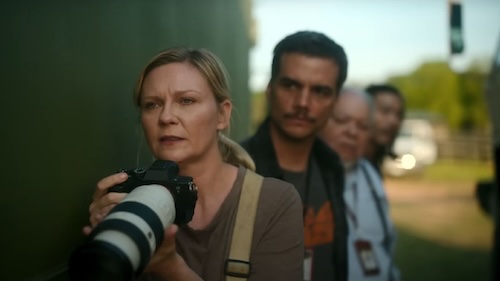
I’ve now seen this movie described as a love letter to journalism and photo-journalists. And I had no idea going into this movie that this was the case. But I was delightfully surprised at how photographer-centric this movie was. Kirsten with her Sony A7-V and her manual Leica lens, and Cailee Spaeny with her Nikon FE2 film camera throughout the film.
It gives a glimpse into the world of photojournalism in a way I’ve personally never witnessed or visualized. I’ve watched documentaries which cover war correspondents on the field. I’ve listened to Sebastian Junger describe his time on the front lines documenting with his friend Tim Hetherington, the war photographer who was killed documenting Libya’s civil war thirteen years ago. But this was much more of a visceral experience, despite the fact that it’s fiction.

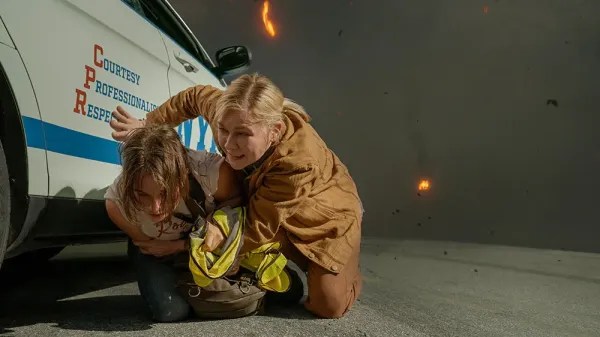
Showing what it is like to risk your life as a journalist on the front lines of a war is what was front and center in this movie. And as a photographer I was noticing scenes and moments where my own fingers were feeling around for my camera that I carry around with me.
And it immediately made me think, “What would I do in this situation?” And I have to believe that I would be far away from the front lines. I wondered “Why do they do this? Why risk your life to capture these photos when you don’t have to. It’s at your own peril. It feels reckless and suicidal!”
And I think about the people who are doing that right now in places like Ukraine and Russia, and especially those in Gaza. People putting on the “PRESS” kevlar and helmets and running around behind soldiers taking photos to document these moments of what humans do to each other. At the risk of them never being seen, too. I think about that. All it takes is one bullet or stray piece of metal to end your life, break your camera. And everything you were doing it for is immediately lost and in vain.
You can tell that the journalists in the movie risk their lives for pragmatic reasons — to get the money shot. And to get the money shot you have to be at the right place at the right time. It’s all about trying to be at the right place at the right time. But it’s not just being at those places that are risky. It’s the entire journey there that is filled with all sorts of risks, too.
III.
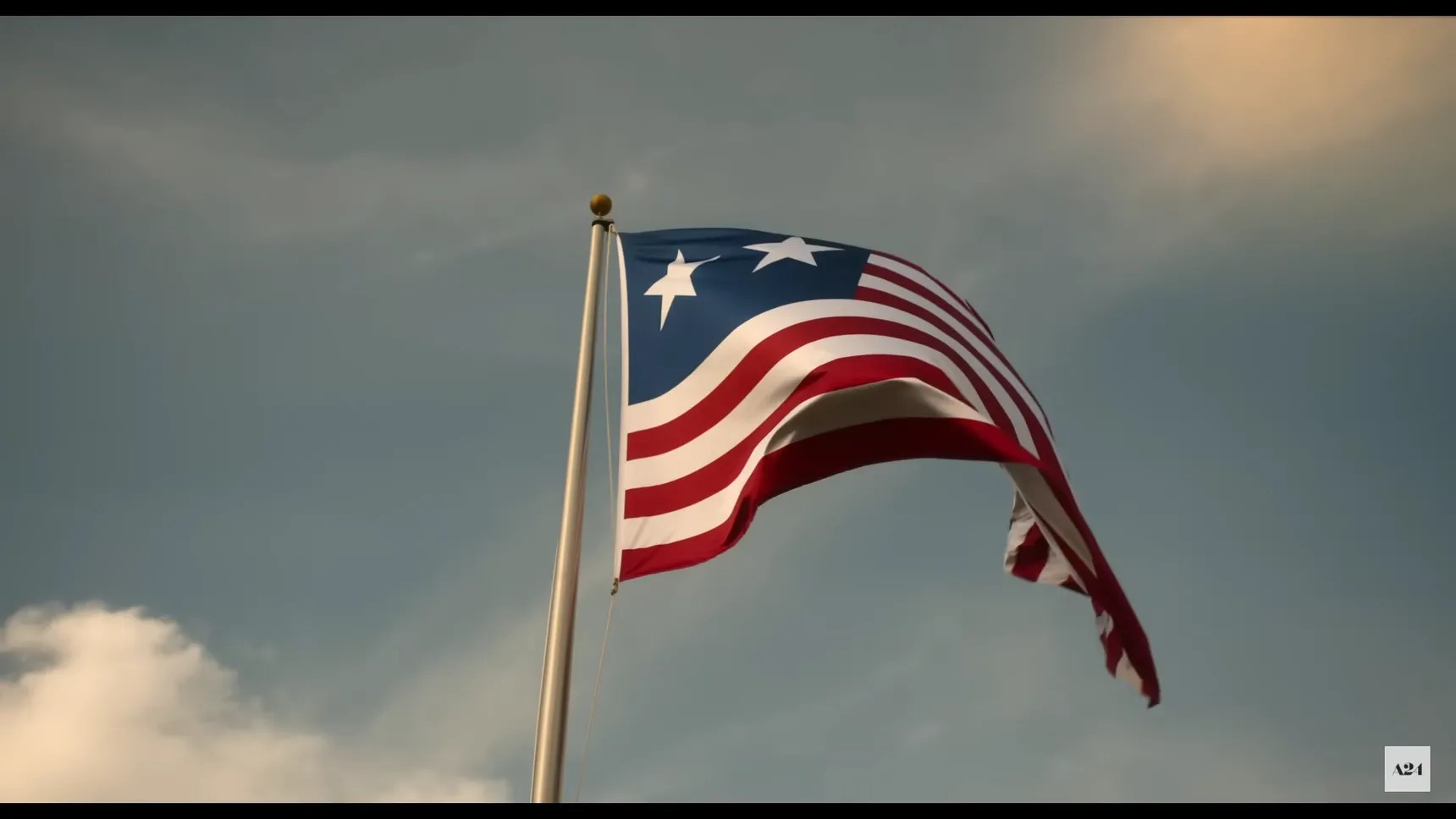
This movie is technically a political movie, but doesn’t seem to want to play sides. It doesn’t seem to have a political agenda necessarily. It lets us paint our own worldviews over the setting of this movie, which I can’t decide is lame or ingenious. It mostly seems to be tapping into the collective anxiety that we probably all feel to one degree or another. And sadly, despite this movie taking place in the United States, it feels fairly universal no matter where it’s being viewed. Our world is violent, polarized, and fragile.
This movie was written in 2020, before even the January 6th insurrection. There were scenes in this movie that could be examples of for why certain moments and scenes from the storming of the Capitol felt like a movie to us. There are scenes in Civil War that felt very similar to watching clips live on TV on January 6th.
IV.
Social media is partially what makes this movie what it is for me. I’ve sadly seen people killed on my little glowing screen as I’m scrolling through social media before bed. Actual human beings being killed by one another on video. It’s jarring and disorienting, and ultimately desensitizing. The fact that I can see that and then see an ad for a new laundry detergent or a picture of a friend’s newborn immediately after has to be damaging to our psyche.
This movie is violent. It has scenes of limp dead bodies in the streets. People being blown up. People being shot. Blood gushing out of gunshot wounds. It’s loud and jarring. It’s not in your face about it though, it’s not Quentin Tarantino with gallons of bright red blood bursting out of wounds. It feels like we are there watching human beings kill one another in a cold, matter-of-fact way. It doesn’t feel like an episode of the Walking Dead, it’s not like watching a dystopian sci-fi movie. The closest thing I’ve seen to it is Handmaid’s Tale, and even that feels a far-fetched compared to this movie. Civil War feels real. And it’s disturbing. And I think, and hope, that people are disturbed when they watch it.
V.
When the movie ended I found myself sitting still in the theater stunned and overwhelmed by what I had just sat through. My hands were cold, and my fingers were tingling. I could tell my heart rate was up. I had tears in my eyes, not from necessarily the storyline of the movie, but by the general premise. I was saddened by the violence, by the thought of how this is what we truly do to one another in this world. We devalue each other and kill each other. We are so violent. And there are people who are risking their lives to document it all in places like Gaza. And in various wars we hear so little about in the United States, in various countries in Africa.
I sat in the huge theater by myself for a while, just gathering myself a bit. I loved how the story was told through a snapshot of the lives of these journalists, and the two photographers in particular. It made it feel more personal for me because it helped me imagine what it must be like.
VI.
Kirsten Dunst was great in this film. And I really loved how they portrayed her as a seasoned photographer. She became a de facto mentor to an enthusiastic young photographer who tagged along with them. The way she carried herself in the film was a woman with confidence, with years behind her. Someone who has seen things that no one should have to see, and it’s shaped her into who she is. She carries those moments with her in her heart at all times. They come back to her vividly in the bath or in her dreams, or during intense moments on the field. The perspective she’s had to take has given her skills that have kept her alive, but seem cold to others. But to stay alive on the frontlines, that seems to be a requirement. It’s not a time for sentimentality.
She was not dolled up. She was not shown as cute or ditsy or naive. She was wise, seasoned, and carried with her a no BS persona. You could see it in her eyes, in her pores. And I thought it was really, really great.
This is not how I first think of Kirsten Dunst. I think of her in Spider-Man, and the Virgin Suicides, Mary Antoinette, and Elizabethtown.
I’ve seen her in plenty other movies as well, but those are the first movies I think of with her. This movie immediately made me think of her role in Elizabethtown, though. In that movie she’s a happy-go-lucky, optimistic and bubbly flight attendant — she’s a Claire, as she would say. And a few times in the movie she takes “pictures” of moments by framing them with her thumbs and fingers and taking a “picture” of the moment to remember it.

On the way home from the theater it was quite dark, and I was on the back streets way out west in Omaha. I was thinking through the movie, quietly listening to some music. I looked out my window and saw that there was a crescent moon, and it looked huge and orange along the horizon. It was beautiful and I was stirred up by it. I thought about how it was midnight and there were probably not many people looking at the moon at that moment. Just a few days prior millions upon millions of people were looking right at it as it crossed in front of the sun. But tonight, it was me and a few people that were out on the road.
After seeing a movie where photography was a central point of it all, it made me wish I had a camera with my long zoom lens on it. I wanted to capture the moment because it was a moment that other people were not seeing. But I couldn’t. I quickly took a dramatically poor photo of it with my iPhone camera while I drove. And then decided that I needed to just take a mental snapshot like Claire from Elizabethtown.
And so I did.
 Stepping Back